Get L1 copyright
The L1 copyright Ideas
Table of Contents8 Simple Techniques For L1 copyrightL1 copyright Fundamentals ExplainedThe Best Guide To L1 copyrightThe 8-Minute Rule for L1 copyrightIndicators on L1 copyright You Should Know
L-1 visas are offered to staff members of a worldwide firm with workplaces in both the USA and abroad. L1 copyright. The copyright enables such international employees to relocate to the company's United States office after having actually worked abroad for the firm for at the very least one continual year within the previous 3 before admission in the USOne L-1 copyright can allow several workers entrance into the USA. Spouses of L-1 copyright holders are allowed to function without constraint in the United States (utilizing an L-2 copyright) case to condition, and the L-1 copyright might legitimately be made use of as a tipping rock to a copyright under the doctrine of twin intent.
In 2019, Indian nationals got 18,354 L-1 visas, accounting for 23.8% of all L-1 visas released in 2019. According to USCIS data, the largest companies to receive L-1 visas in 2019 were Tata Working as a consultant with 1,542 authorized L-1 copyright petitions, Infosys with 517, Amazon with 455, Observant with 382, and Deloitte with 305.
Congress produced the L-1 copyright in 1970. It was introduced as a "noncontroversial change" for multinational American companies. The original copyright called for that the work tenure match straight before getting the firm transfer. Congress originally did not define "specialized understanding". In 1980, the State Division issued 26,535 L-1 visas.
Rumored Buzz on L1 copyright
Significant Indian outsourcing firms such as Tata, Infosys, and Wipro significantly utilized the L-1 copyright personnel American multinational companies. Half of Tata's workers brought to the United States came on L-1 visas.
By 2000, Immigration and National Solution videotaped 294,658 copyright access. In 2002, Congress permitted L-1 copyright partners, who are on an L-2 copyright, the authorization to function freely within the USA. In 2003, the Us senate Judiciary Committee held a hearing on the L-1 copyright. In 2004, the number of L-1B visas surpassed the variety of L-1A visas.
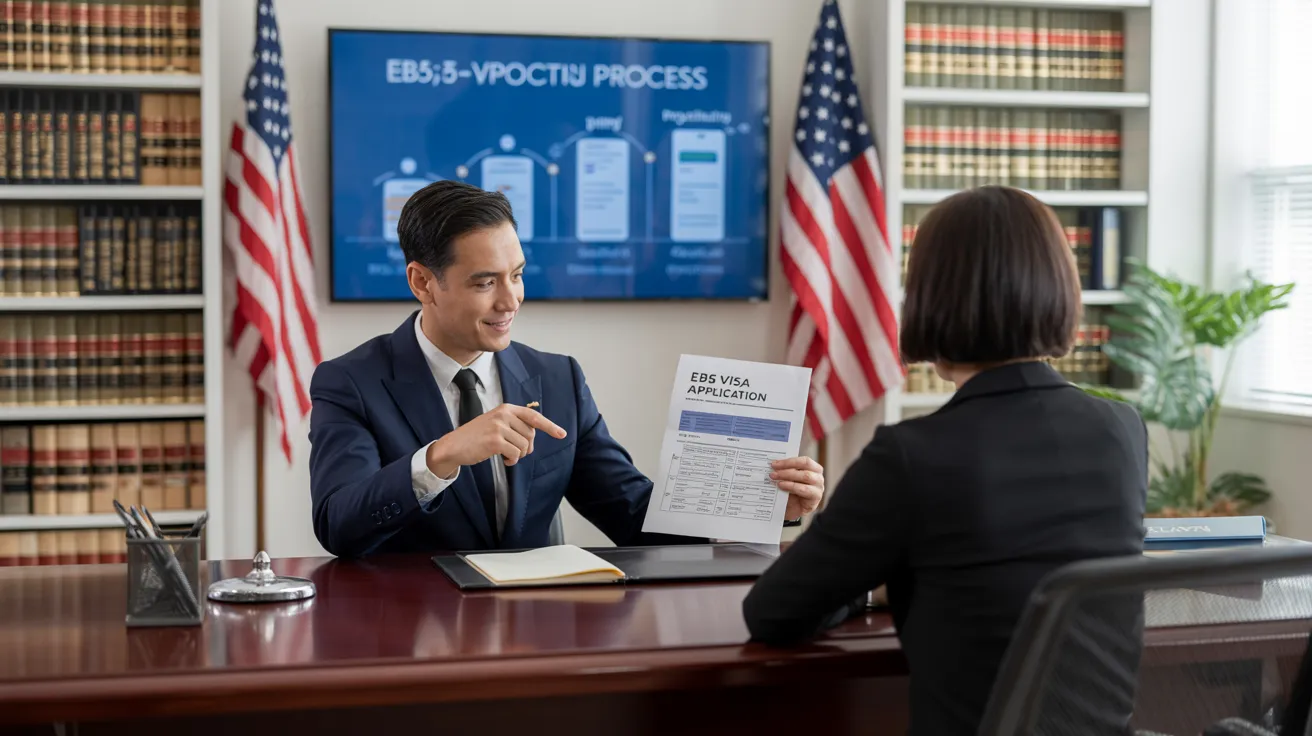
Applicants that are in the USA at the time of the declaring of the I-129 can request a change of condition from their existing nonimmigrant standing (i.e. visitor, trainee, etc), so long as they are in condition at the time of the filing of the I-129. If they go out of standing after the filing, but prior to approval, there is no negative effect, and the individual does not build up unlawful visibility.
Youngsters explore your L1 copyright of the primary L-1 can participate in institution. The spouse of the primary L-1 has an automated right to function in the United States.
Some Known Facts About L1 copyright.
An I-797 Notification of Action showing the approval of the copyright request does not guarantee that a copyright will be issued at the United state

L1 copyright Things To Know Before You Buy
For an L-1 copyright applicant, "dual Intent" is permitted: unlike some classes of non-immigrant visas (e.g., J-1 visas (L1 copyright)), L-1 applicants might not be rejected a copyright on the basis that they are an intending immigrant to the USA, or that they do not have a house abroad which they do not intend to desert
Renewal in the United States applies to standing only, not the actual copyright in the ticket. copyright renewal, the candidate should go to a UNITED STATE
An alien can not leave the United States and then reenter without contact us a legitimate L-1 copyright, and have to appear directly prior to a consular officer copyright issuance.
Rumored Buzz on L1 copyright
An individual in L-1 standing typically might work only for the requesting company. If the L-1 worker gets in based on an L-1 blanket, nevertheless, it normally is feasible for the employee to be relocated the same capability to any contact us other relevant business provided on the covering. The L-1 copyright program has been slammed for several factors.
In one instance, The U.S. Division of Labor fined Electronics for Imaging $3,500 for paying its L-1 copyright employees $1.21 an hour and working some of them approximately 122 hours a week. Some sector reps have charged business of using the L-1 program to change united state employees. Detractors and federal government officials have aimed out exactly how the copyright program does not define "specialized knowledge" for foreign employees in the L-1B copyright group.